The Product Your Users See Is Only Half the Product
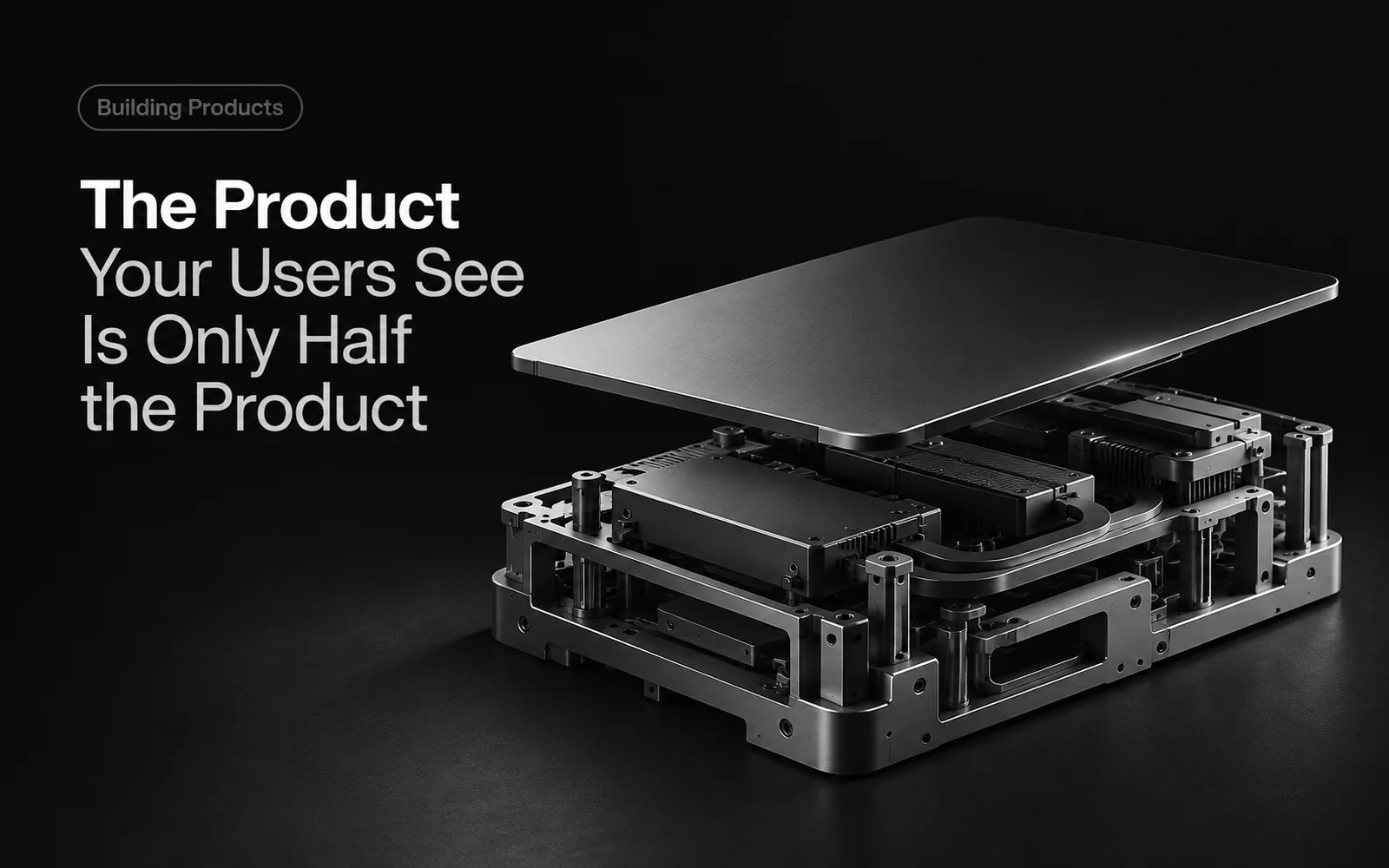
People often estimate the size of a software product by counting the customer-facing screens.
They see a short onboarding journey, a dashboard, and one main action. The product appears simple because the experience is supposed to feel simple.
But a simple customer experience can require a substantial operational product behind it.
One subscription screen creates many operational situations
A customer may see one page for selecting and paying for a subscription.
The business still needs to handle what happens around that page.
- An account may require verification.
- A payment may fail after access was granted.
- A customer may request a refund.
- A plan may be changed incorrectly.
- Access may need to be restored.
- Imported data may need correction.
- A suspicious account may require investigation.
These situations may not deserve separate customer-facing features, but the responsible team needs safe ways to understand and handle them.
Manual database edits are not an operating model
Early in development, a technical person may resolve unusual situations directly in the database.
That can be reasonable while the team is learning what actually occurs.
It becomes dangerous when expected business operations permanently depend on a developer making sensitive changes by hand.
The operations team waits for technical availability. The developer interrupts product work. The correction may lack validation or a clear audit trail. A repeated business case is treated as a new emergency every time.
At that point, the product does not operate independently.
It needs a full-time babysitter.
Operational software deserves product thinking
An internal control is still a product experience.
The person using it needs to understand the current state, know which actions are allowed, see the consequence before confirming it, and recover safely from mistakes.
For example, a refund action should not be a mysterious button that changes several systems without explanation. It should show the eligible amount, payment reference, expected access consequence, responsible actor, and resulting state.
Internal tools can be visually simpler than customer-facing experiences. They cannot be careless merely because customers do not see them.
Do not build the entire control room before launch
The answer is not to predict every possible situation and build a massive administration platform before the first user arrives.
Start with the operational cases the team already knows are likely, especially those involving money, access, privacy, security, or important data.
For less common cases, a reviewed manual process may remain appropriate while the team learns. When the same situation repeats, its evidence can justify a safer product control.