The Fastest-Looking Software Team May Cost You the Most
If you judge a software team by how many screens they show you in the first month, you might choose the team that will cost you the most money and time later.
Visible progress feels objective. Ten screens look better than three. A clickable dashboard looks more valuable than a discussion about how the data connects, who can access it, or how different parts of the product should interact.
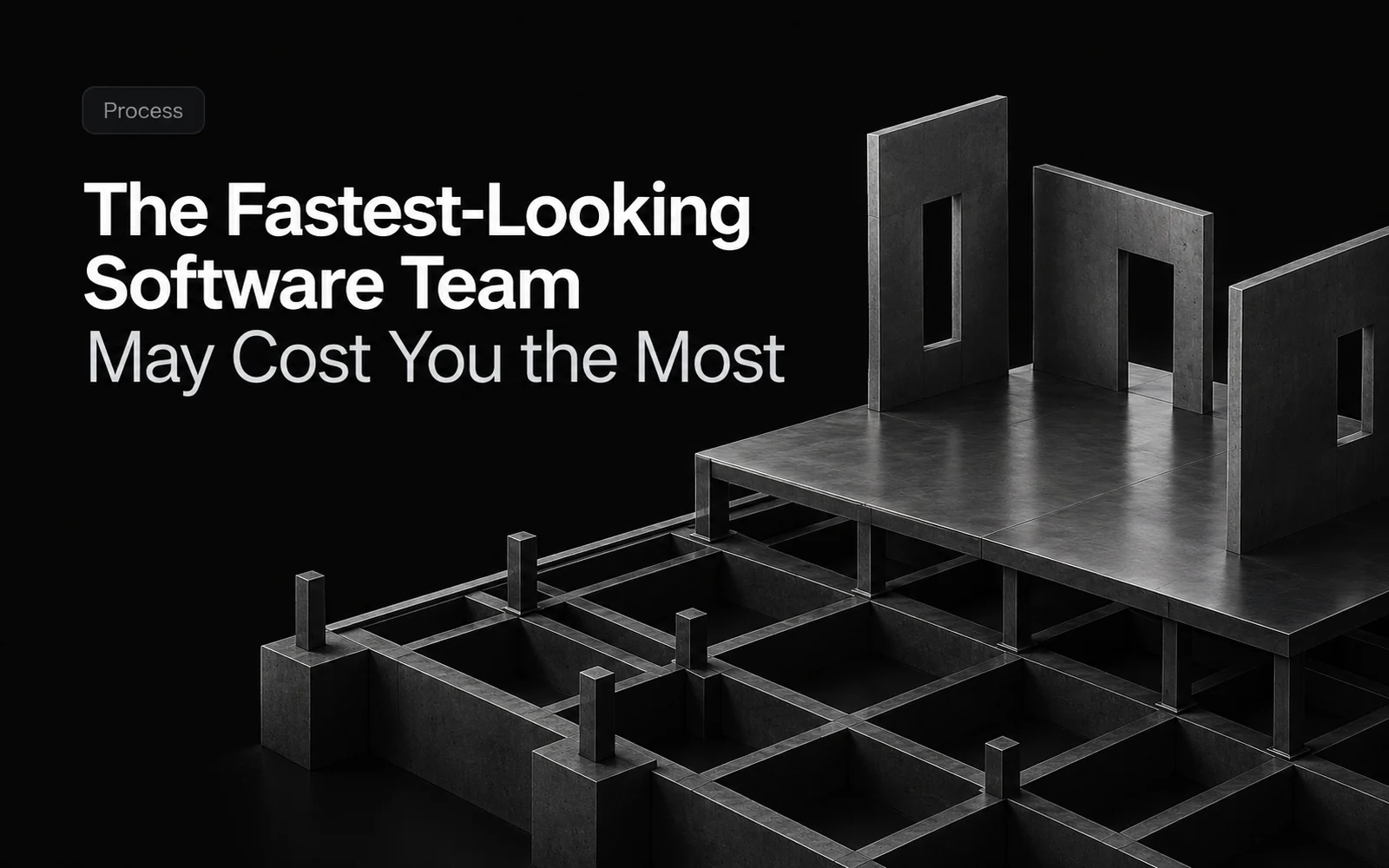
Two teams building the same mansion
Imagine two teams building a mansion.
The first team begins with the architect and engineer. They study the land, build the foundation, and plan how the plumbing, electricity, and structure will support the floors above them.
The second team begins with walls. Walls are visible. They create rooms the client can enter, photograph, and show to other people.
After one month, the second team looks much faster. You walk through the site and feel relieved. Your money produced something you can see.
Then you visit the first site. People are still working with concrete and things under the ground. There is barely anything impressive to show. You start thinking, “What have I been paying for? Did I choose the wrong team?”
Then construction reaches the next floor.
The second team discovers that the plumbing cannot pass through a wall it already completed. The electricity was never planned for the new rooms. Parts of the finished structure must be opened, moved, and rebuilt.
Now you are paying twice for the same wall.
Meanwhile, the first team can build on the decisions already made. They know where the pipes and wiring belong, so adding the next floor does not require reopening the same completed work.
Early work needs to earn its time
Spending more time does not automatically produce better software. A weak team can move slowly, overthink simple decisions, and hide poor execution behind words such as architecture and quality.
The value is what the early work makes possible afterward.
Take permissions. If a team defines access rules once and uses them consistently, adding a new account role can be easier to implement and check. If each screen contains its own version of those rules, the same change can require edits throughout the product. Differences between those versions then create more work to investigate and correct.
That is an explanation a founder can evaluate. “We are working on architecture” is not enough.
The cost also depends on when that rework arrives. Once users are waiting for fixes and the business needs new capabilities, repairing old decisions competes with work the company expected to be moving forward on.
Ask what the work makes possible
Founders still need working software, clear milestones, and evidence that the team is delivering. Keep measuring visible progress, but ask about the decisions underneath it:
- Which parts of the system are being connected, and why?
- What later feature or change should this work make easier?
- Which important failure is being handled now?
- Can the team show where it built on existing work instead of redoing it?
- When a requirement changes, how far does that change spread?
Then compare the explanation with what happens over time. If the team said a shared permissions model would simplify adding the next role, did it? If a new feature keeps forcing changes to three existing ones, what decision is missing?