Automation Makes a Broken Process Fail Faster
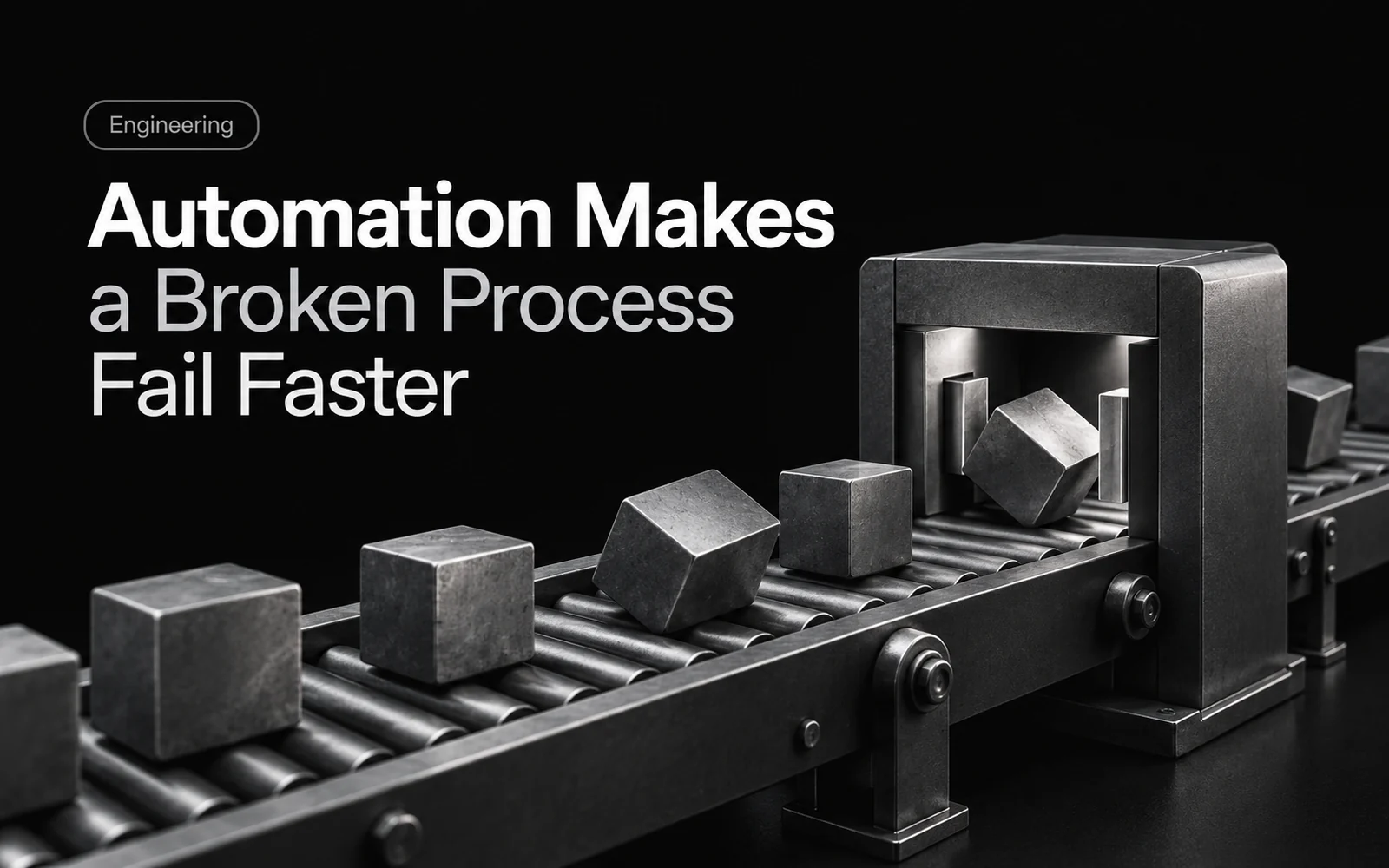
Automation is often introduced as the solution to a slow process.
The team is repeating work, decisions take time, and people make mistakes. A new tool or AI workflow promises to remove the effort and increase output.
But adding automation does not automatically resolve an undefined or faulty process. The team still needs to understand what produces a correct result.
The machine produced exactly what the process requested
Imagine a factory packing the wrong product into every box.
The factory currently produces fifty incorrect boxes each day. Someone installs a faster machine expecting production to improve.
The machine now produces one thousand incorrect boxes.
Technically, the automation succeeded. It operated faster, followed its instructions, and increased output.
Faster packing did nothing to stop the wrong product reaching the boxes.
In software, teams can make the same decision when they ask AI to speed up a workflow before understanding why it keeps producing the wrong outcome.
Understand the decisions before removing the person
Before automating a workflow, operate it manually long enough to answer four questions:
- What information does this process require?
- Who owns each decision?
- What can go wrong?
- What does a correct result look like?
Consider a company automating incoming sales leads.
If the team has not agreed on what makes a lead qualified, faster routing does not settle that disagreement. It may send valuable opportunities to the wrong person, reject good prospects, or fill the sales pipeline with companies the business cannot help.
The routing became faster. The business decision remained undefined.
The manual process does not need to be perfect
Waiting for perfection would prevent useful automation forever.
The goal is not to remove every exception or predict every future change. The goal is to understand the normal path, important decisions, known failures, and ownership well enough to recognize whether the automated result is correct.
A team can then automate repetitive steps while keeping judgment with the appropriate person.
For example, AI may extract information from a request and prepare a recommended classification. A responsible owner can still decide unusual or high-risk cases until the evidence supports more automation.
Automate the stable work first
The best starting points are usually repetitive actions with clear inputs and verifiable outputs.
Copying approved information between systems, formatting a known document, notifying the correct owner, or checking a defined condition can create immediate value.
Ambiguous decisions, sensitive communication, and workflows that still change every week usually require more understanding first.